


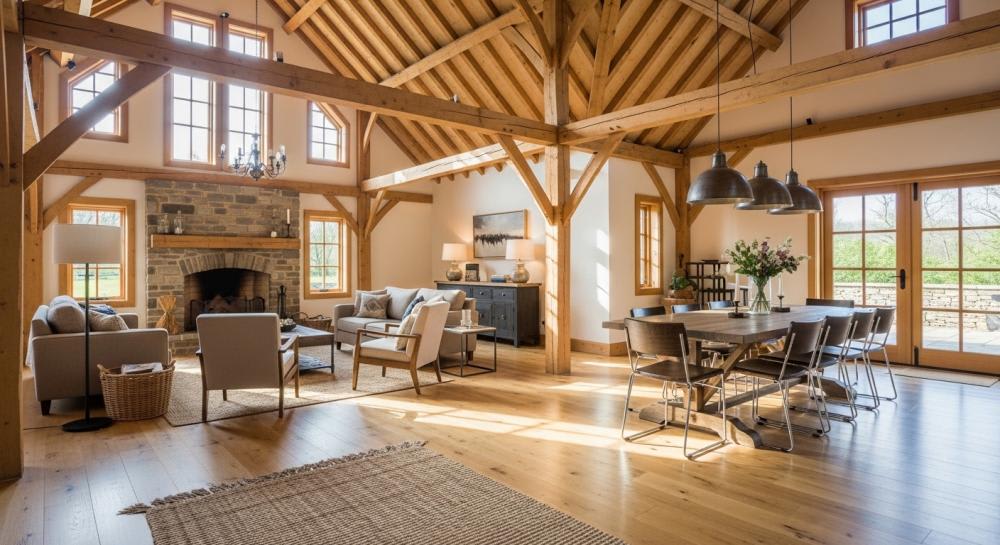
There’s something incredibly special about a barn conversion. The soaring ceilings, the exposed beams, the sense of space and history — they offer a completely different feel from a standard home.
However, renovating a barn is not simply a case of adding plasterboard and choosing a kitchen. Barns were built for agricultural use, not everyday living. Therefore, converting one into a comfortable, energy-efficient home requires careful planning and thoughtful decisions.
If you’re considering taking on a barn renovation, here’s what you need to know before you begin.
Understanding Planning Permission
Most barn conversions require planning permission, particularly if the building is being converted from agricultural use into residential use.
Some projects may fall under permitted development rights. However, this depends on factors such as:
-
The structural condition of the barn
-
Its location (for example, conservation areas or green belt land)
-
Whether major structural rebuilding is required
It is worth reviewing the planning permission guidance on GOV.UK to understand the current rules.
You may also wish to check the permitted development rights for agricultural buildings to see whether your project qualifies under Class Q regulations.
Applications are typically submitted via the Planning Portal application guidance, which outlines documentation requirements and submission steps clearly.
Speaking to your local planning authority early will help avoid delays. Barns often sit in rural settings, and planning departments pay close attention to preserving the surrounding landscape.
Assessing Structural Integrity
Unlike traditional homes, barns were never designed for insulation, heating or internal partitions. Their original purpose was storage and shelter.
Before committing to renovation, commission a structural survey. Pay close attention to:
-
Roof condition
-
Timber beams
-
Foundation stability
-
Wall thickness and construction
-
Signs of damp or movement
Replacing a roof or reinforcing foundations can significantly increase costs. Therefore, understanding the building’s condition from the outset is essential.
Preserving Character While Modernising
One of the greatest joys of a barn conversion is its character. Exposed brickwork, original timber trusses and vast open spaces are features worth celebrating.
When working with older agricultural buildings, it can be helpful to review Historic England’s advice on traditional farm buildings, particularly if the structure has heritage value.
Conservation-led principles, often promoted by organisations such as the Society for the Protection of Ancient Buildings (SPAB), emphasise repair over replacement wherever possible.
Instead, consider:
-
Retaining original beams where structurally possible
-
Leaving sections of exposed brick or stone
-
Using sympathetic materials in new additions
-
Choosing finishes that complement rather than compete
Soft, natural tones and textured materials tend to sit beautifully in these spaces.

Insulation and Energy Efficiency
Barns can be notoriously cold. Large open volumes and solid walls often lack insulation entirely.
Improving energy efficiency should be a priority. For practical advice, the Energy Saving Trust guidance on home insulation provides helpful information on upgrading older properties responsibly.
-
Insulating beneath new flooring
-
Installing high-performance glazing
-
Adding roof insulation between rafters
-
Considering underfloor heating
Because barns often have concrete or earth floors originally, replacing or insulating the subfloor properly can make a dramatic difference to comfort levels.
Breathability is still important, particularly in older brick or stone barns. Modern materials should not trap moisture within walls.
Flooring in Barn Conversions
Flooring plays a crucial role in both the comfort and visual success of a barn conversion. These spaces are often large and open-plan, so the floor becomes a defining design element.
Originally, many barns had compacted earth or concrete floors. During renovation, these are typically replaced or upgraded. The key is balancing durability, warmth and style.
Engineered Wood Flooring
Engineered wood is a popular choice in barn conversions. Its layered construction provides stability, which is particularly important in buildings where temperature fluctuations can occur.
It works beautifully alongside:
-
Exposed beams
-
Brick feature walls
-
Vaulted ceilings
Wider planks in warm oak tones complement rustic architecture without feeling overly modern. Additionally, engineered boards often work well with underfloor heating systems — a common addition in barns with large floor areas.
Choosing a high-quality product with a thick wear layer ensures longevity, especially in high-traffic open-plan spaces.
Solid Wood Flooring
Solid wood can also be an excellent option where subfloor conditions allow. It adds authenticity and natural texture. However, barns may experience greater humidity variation, so proper installation and ventilation are essential.
Hardwax oil finishes are often preferable to thick lacquer, as they maintain a more natural appearance.
Polished Concrete
In some conversions, polished concrete is chosen to create a contemporary contrast against rustic beams. It is durable and works well with underfloor heating.
However, it can feel cold visually and physically if not balanced with soft furnishings. Large rugs and warm lighting can prevent the space from feeling industrial.
Natural Stone
For a more traditional aesthetic, limestone or slate flooring can feel entirely at home in a barn setting. Stone is extremely durable and suits high-traffic areas such as kitchens and hallways.
As always, installation must consider insulation beneath and moisture management.
Lighting and Layout Considerations
Barns are known for dramatic ceiling heights and open-plan layouts. While this creates a stunning sense of space, it can also present challenges.
Think carefully about:
-
Zoning large spaces with furniture and rugs
-
Layered lighting rather than relying solely on overhead fixtures
-
Acoustic control in open-plan areas
-
Heating distribution across wide floor spans
Thoughtful layout planning prevents the space from feeling cavernous.
Budgeting for a Barn Conversion
Barn renovations often cost more per square metre than standard extensions. Structural work, insulation upgrades and specialist glazing add up quickly.
Build a realistic budget that includes:
-
Structural reinforcement
-
Roofing repairs
-
Insulation
-
Services installation (plumbing and electrics)
-
Flooring and finishes
-
Contingency of at least 15%
Being financially prepared reduces stress later.
Is a Barn Conversion Worth It?
When done properly, a barn conversion can result in an extraordinary home filled with character and light.
They are not the easiest projects. However, with careful planning, the right materials and considered flooring choices, they can offer something truly unique — a space that feels both rustic and refined.
If you are exploring flooring options for a barn project and would like guidance on durable, high-quality solutions that complement exposed beams and open-plan living, do browse our other blogs for inspiration.


