


A loft conversion is one of the most effective ways to add space without extending your home’s footprint. Whether you need an extra bedroom, a quiet home office or a light-filled studio, the unused space above your ceiling often holds incredible potential.
However, converting a loft is not simply a matter of adding stairs and plasterboard. Structural integrity, insulation, lighting and flooring all play crucial roles in creating a space that feels comfortable and cohesive with the rest of your home.
If you’re considering a loft conversion, here’s everything you need to know before you begin.
Do You Need Planning Permission?
Many loft conversions fall under permitted development rights, meaning full planning permission may not be required. However, there are limits on roof extension size, materials used externally and overall volume.
Before starting any work, it’s sensible to review the planning permission guidance on GOV.UK to understand current rules and restrictions.
In some cases, your project may qualify under permitted development. However, it is important to check the permitted development technical guidance on GOV.UK to confirm whether your specific property meets the criteria.
If you live in a conservation area or a listed building, different rules may apply.
Even if planning permission isn’t required, building regulations approval always is. Structural safety, fire escape routes, insulation and staircase design must meet strict standards. You can find full details within the UK building regulations approval guidance.

Types of Loft Conversions
Not all loft conversions are the same. The right option depends on your existing roof structure and budget.
Roof Light Conversion
This is the simplest option. It involves adding roof windows without altering the roofline significantly. It works best when there is already sufficient head height.
Dormer Conversion
A dormer extends vertically from the existing roof slope, creating additional headroom and usable floor space. This is one of the most common types in the UK.
Hip-to-Gable Conversion
Typically used in semi-detached or detached homes, this extends the sloping side roof to create a vertical wall, increasing internal space.
Mansard Conversion
A more extensive option, often requiring planning permission, which significantly alters the roof structure to maximise space.
Choosing the right type early helps manage both cost and expectations.
Structural Considerations
Lofts were not originally designed to carry regular foot traffic or heavy furniture. Therefore, structural reinforcement is almost always required.
This typically includes:
-
Installing new floor joists
-
Adding steel beams (RSJs)
-
Strengthening existing timbers
-
Ensuring adequate load-bearing support
Working with experienced professionals is essential. Following RIBA’s guidance on choosing an architect can help ensure you appoint the right expert for your project.
A structural engineer will calculate load requirements and ensure compliance with building regulations, preventing issues such as sagging floors or cracks appearing in ceilings below.
Insulation and Energy Efficiency
Because heat rises, lofts are often the warmest part of the house in summer and the coldest in winter. Proper insulation transforms the space into a comfortable room year-round.
Insulation is usually added:
-
Between rafters
-
Beneath rafters
-
Within floor voids
For practical advice on improving energy performance, the Energy Saving Trust’s insulation guidance offers helpful, up-to-date information.
Ventilation must also be carefully considered to prevent condensation. Without adequate airflow, moisture can build up within roof structures, leading to long-term problems.
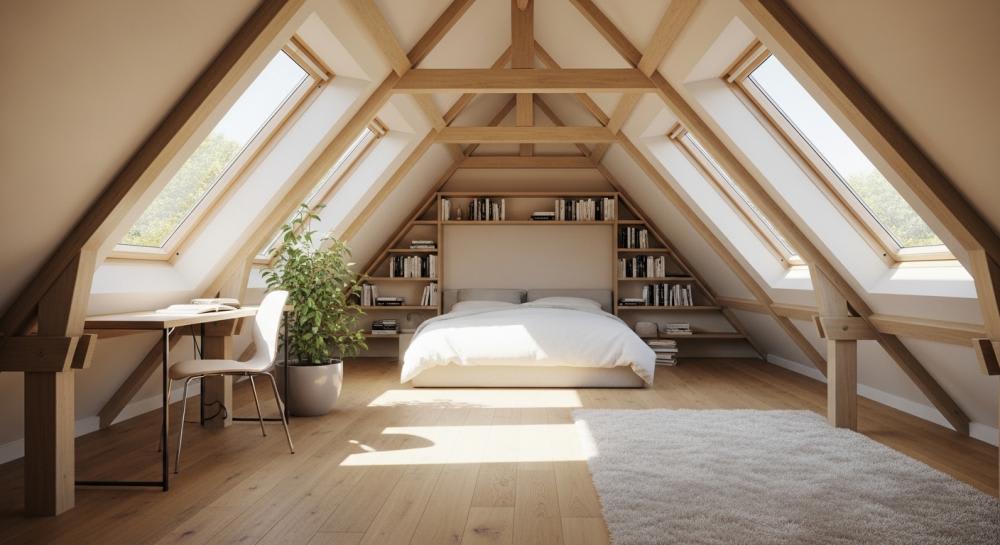
Flooring in Loft Conversions
Flooring in a loft conversion requires both practicality and style. Unlike ground floors, lofts sit above existing living areas, so acoustic control and weight are important considerations.
Strength and Structure First
Before choosing a finish, the structural base must be correct. New joists are typically installed above the existing ceiling joists to support the new floor.
Once reinforced, a structural deck such as tongue-and-groove boards is fitted. Only then should decorative flooring be installed.
Weight matters in loft conversions. Heavy materials such as thick stone may not always be suitable without additional reinforcement.
Engineered Wood Flooring
Engineered wood is often an excellent choice for loft spaces. It provides the natural warmth of real timber while offering improved stability.
Because lofts can experience temperature fluctuations, engineered boards tend to perform more consistently than solid wood. They are also lighter than some alternative materials.
Wider planks can help visually expand smaller loft rooms, while lighter oak tones enhance natural light from roof windows.
Additionally, engineered wood works well with underfloor heating systems if installed.
Laminate Flooring
Laminate can be a cost-effective option for loft conversions, particularly in guest bedrooms or home offices.
Modern laminates offer realistic wood visuals and strong scratch resistance. However, quality underlay is essential to minimise noise transfer to the rooms below.
Acoustic underlay can significantly reduce impact sound — an important factor in multi-storey homes.
Carpet for Comfort
If the loft is being converted into a bedroom, carpet remains a popular choice. It adds warmth, reduces noise and feels soft underfoot.
This can be particularly beneficial in family homes, where sound insulation matters.
Staircase and Fire Safety
Access is just as important as the loft itself. Building regulations require permanent stairs rather than ladders, along with appropriate fire safety measures.
Fire safety requirements, including escape windows and smoke alarms, must comply with government fire safety guidance for dwellings.
The staircase must:
-
Provide sufficient head height
-
Include handrails
-
Meet fire safety standards
Careful design ensures both safety and practicality.
Budgeting for a Loft Conversion
Costs vary depending on size and complexity. Roof light conversions are generally more affordable, while mansard conversions are more extensive.
Your budget should include:
-
Structural work
-
Insulation
-
Windows
-
Staircase installation
-
Electrics and plumbing
-
Flooring and finishes
-
A contingency of at least 10–15%
Planning thoroughly reduces unexpected surprises later.
Is a Loft Conversion Worth It?
In many UK homes, loft conversions are one of the most valuable improvements you can make. They increase living space without sacrificing garden area and often add significant resale value.
When carefully planned — particularly with attention to insulation, structural reinforcement and appropriate flooring choices — a loft conversion can feel like a seamless extension of your home rather than an afterthought.
If you’re considering flooring for your loft project and want durable, high-quality options that balance comfort and performance, do explore our other blogs for inspiration.


